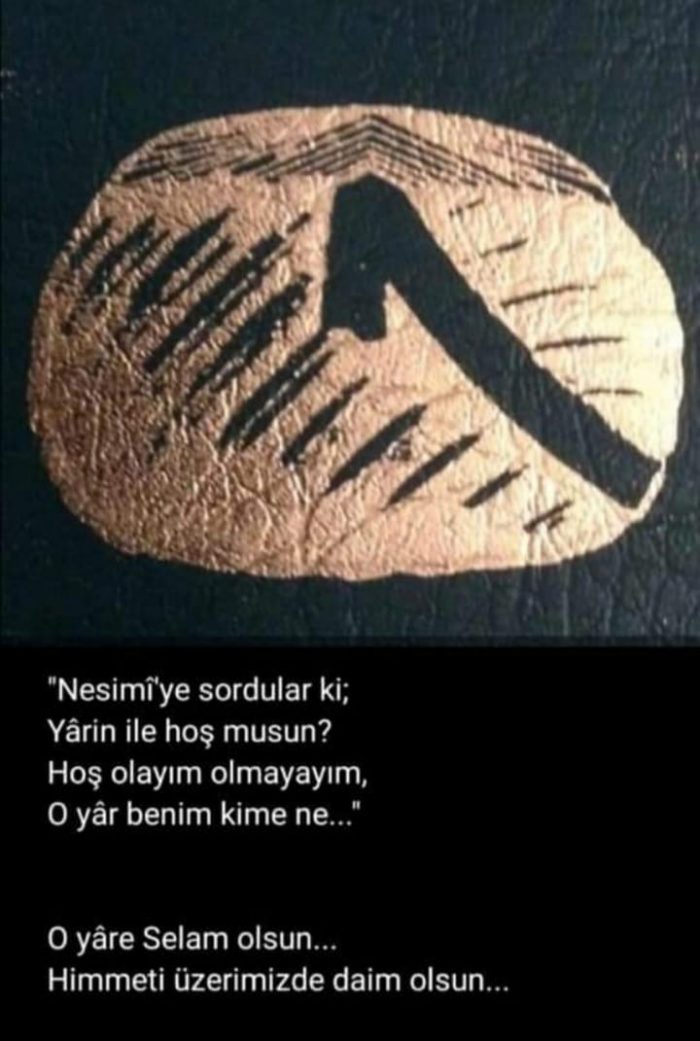
From the poetry of Kul Nesimi (not the Azeri, but the Ottoman Nesimi), we find this magnificent jewel, which is designed to reflect a qur’anic miniature from suratul Fussilat:
Indeed, those who have said, “Our Lord is Allah ” and then remained on a right course – the angels will descend upon them, [saying], “Do not fear and do not grieve but receive good tidings of Paradise, which you were promised.
Fussilat 30
In the pronominal suffix NA joined to the word for Lord – Rabbuna, we find that some people are connecting themselves to Allah, by claiming “ownership” and belonging at the same time, declaring that He is our Lord.
As the danish wise man Kierkegard writes in Either/Or, everytime we say that something is ours, we declare that we are owned by it, as we can see from the examples of my country, my homeland, my God, my dear… so does this link bind both sides in a wonderful relationship.
For that meaningful, voluntary, deep declaration Allah provides a great reward in this life and the next:
We were your allies in worldly life and [are so] in the Hereafter. And you will have therein whatever your souls desire, and you will have therein whatever you request [or wish]
Fussilat 31
To get back to how Nesimi puts the same thought into a new garment:
They ask Nesimi, are you happy with your Beloved
Happy or not happy, He is mine (and I am His), so whose concern is that?
Here he clearly proclaims that the relationship is above reproach, and by stating o yar benim, he claims the reward for Rabbuna.
And now a heartfelt render of the verses of Nesimi from the poem Ben melamet hirkasini: